What Housing Court Taught Me This Summer
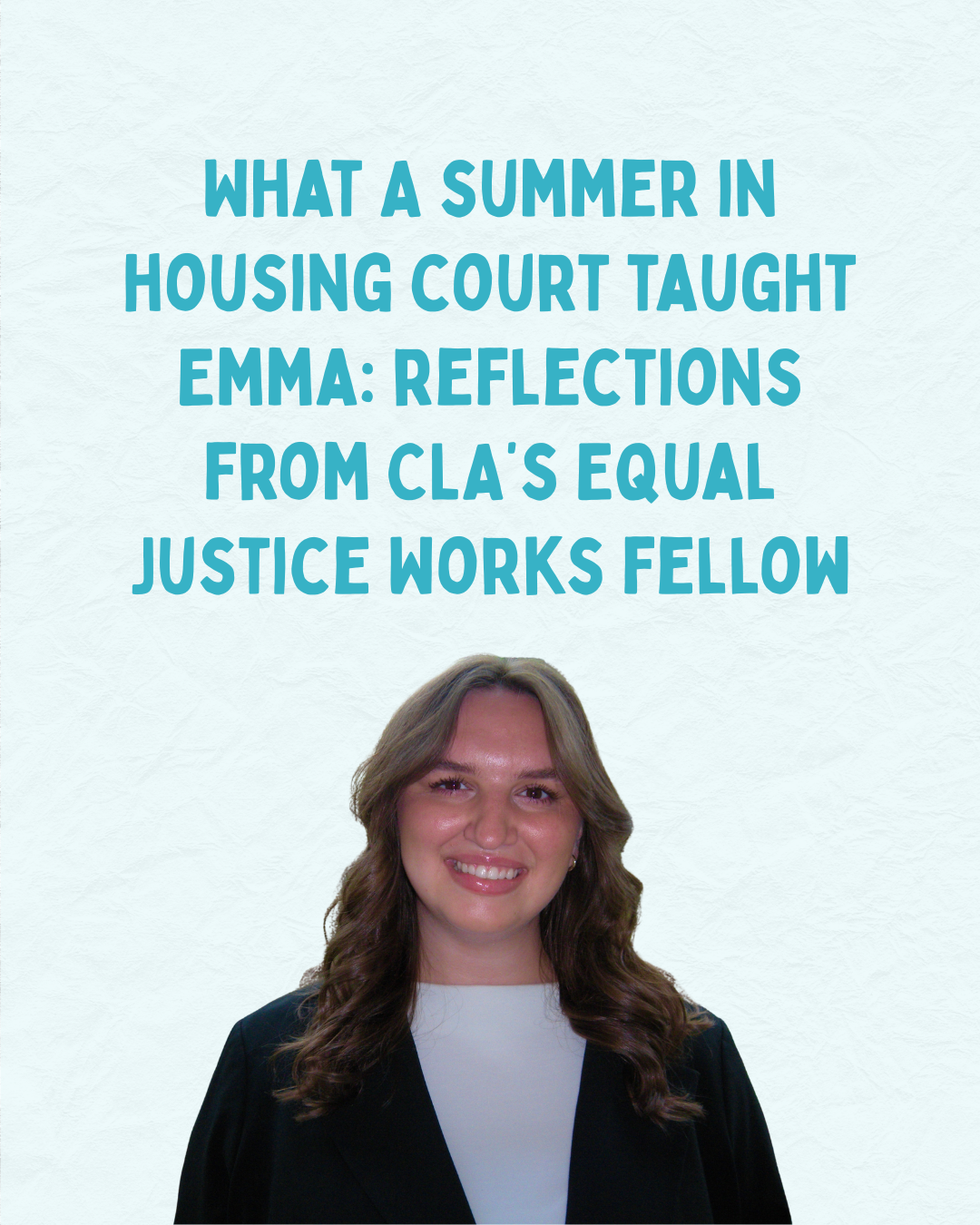
CLA’s Equal Justice Works Summer Fellow, Emma Leipman (3L at Charleston School of Law), reflects on her time at CLA and what she learned spending her summer in housing court.
When I pictured my summer in housing court, I imagined neatly organized case files, careful legal arguments, and long discussions about landlord-tenant statutes. The reality of housing court started at 9:00 a.m. on my first day, when I walked into a courthouse that was already buzzing with attorneys, tenants, landlords, interpreters, and court staff trying to keep dozens of cases moving at once. Housing court is less like a classroom hypothetical and more like a fast-paced intersection of law and real life.
I spent much of my time observing and assisting with eviction matters in housing court. Going into this fellowship, I expected to learn about landlord-tenant law and courtroom procedure. While I certainly gained a better understanding of both, I quickly realized that housing court is about much more than legal arguments. It's about people navigating some of the most stressful and challenging moments of their lives. Everyday reinforced the important role attorneys, legal organizers, and the courts play in ensuring individuals have meaningful access to justice.
“Just a few minutes could determine whether someone had more time to stay in their home, whether repairs would be addressed, or whether the parties could reach an agreement without a hearing.”
A Typical Day
No two days in housing court were exactly alike, but my days usually began by arriving at court, setting up our intake room, and quickly reviewing the docket. Then, the pace picked up quickly. I would help check in tenants, get them screened to confirm that they qualified for free legal representation, and pass the cases along to CLA’s housing attorneys. Throughout the day, I had the opportunity to observe hearings involving evictions and lease violations, assist with client intake and document preparation–like drafting consent orders–and observe while the attorneys negotiated settlements and explained legal procedures to tenants.
One thing that stood out to me was the fast-paced nature of the days in housing court because of the quick turnaround when dealing with same day representation. What surprised me most wasn’t the volume of cases; it was how much could happen within a matter of minutes. Just a few minutes could determine whether someone had more time to stay in their home, whether repairs would be addressed, or whether the parties could reach an agreement without a hearing. This fast-paced environment taught me the importance of quickly assessing the full extent of the legal issue, addressing all the facts, and asking all the right questions while making sure the tenant feels heard.
3 Lessons I Learned
1. Every Case Has a Human Story.
One of the biggest takeaways I will carry with me moving forward is that every case file represents a person or a family facing real challenges.
Whether someone was struggling with unexpected financial hardship, unsafe housing conditions, or simply trying to understand the legal process, it became clear that legal issues rarely exist in isolation.
This experience reminded me that effective advocacy requires both legal knowledge and empathy.
2. Access to Justice Matters!
Housing court also reinforced the importance of access to legal representation.
I observed firsthand how difficult it can be for self-represented tenants to navigate court procedures, understand legal terminology, and advocate for themselves. Because of this, I created a landlord/tenant guide for tenants who are interested in learning more about their rights as tenants and learning about what a landlord can and cannot do.
Watching attorneys provide guidance and representation reinforced just how significant legal assistance can be in helping individuals understand their rights and responsibilities as tenants in South Carolina.
3. The Law Extends Beyond the Courtroom.
Another lesson I learned is that housing law intersects with many other aspects of people’s lives.
A housing case is never only about a lease or a statute. It can affect a person’s job, their children’s school, their health, and their sense of stability. Seeing those connections made housing law feel far more consequential than any textbook could convey.
Seeing these connections gave me a greater appreciation for the broader impact of public interest law.
Why This Experience Matters
I went into this fellowship hoping to become a better law student but I left with a much clearer picture of the kind of lawyer I want to be.
Housing court taught me to pay attention not only to the legal issue on the page, but also to the person sitting at the counsel table. It taught me that preparation matters, clear communication matters, and small acts of guidance can make a significant difference.
Before this summer, I viewed housing law primarily through the lens of statutes and case law. My experience in housing court helped me understand the practical realities and the real-life impact behind those legal principles.
I saw how attorneys balance legal strategy with compassion, how judges manage difficult and emotional cases, and how legal aid organizations work to bridge the gap for individuals who might otherwise face the legal system alone.
Experiences like these demonstrate why access to justice is such an essential part of our legal system.
Looking Ahead
This summer strengthened my interest in public interest law tremendously and reminded me why I chose to pursue a legal career. Housing court is often where the law meets everyday life. While every case involves unique legal questions, they all share one thing in common: they affect people’s homes, stability, and futures.
As I head into my final year of law school, and eventually my legal career, I’ll carry these lessons with me, not only as a future attorney, but as someone who sees access to justice as a vital role in our legal system, where the legal system more accessible and equitable for those who need it most. The law is most meaningful when it helps people navigate real problems in real time, and that’s what my time here at Charleston Legal Access really highlighted.
Want to help? Donate today to help our housing attorneys reach more people.
Need accessible, affordable, and compassionate legal care? Get in touch.
This information is provided for general informational purposes only and does not constitute legal advice.