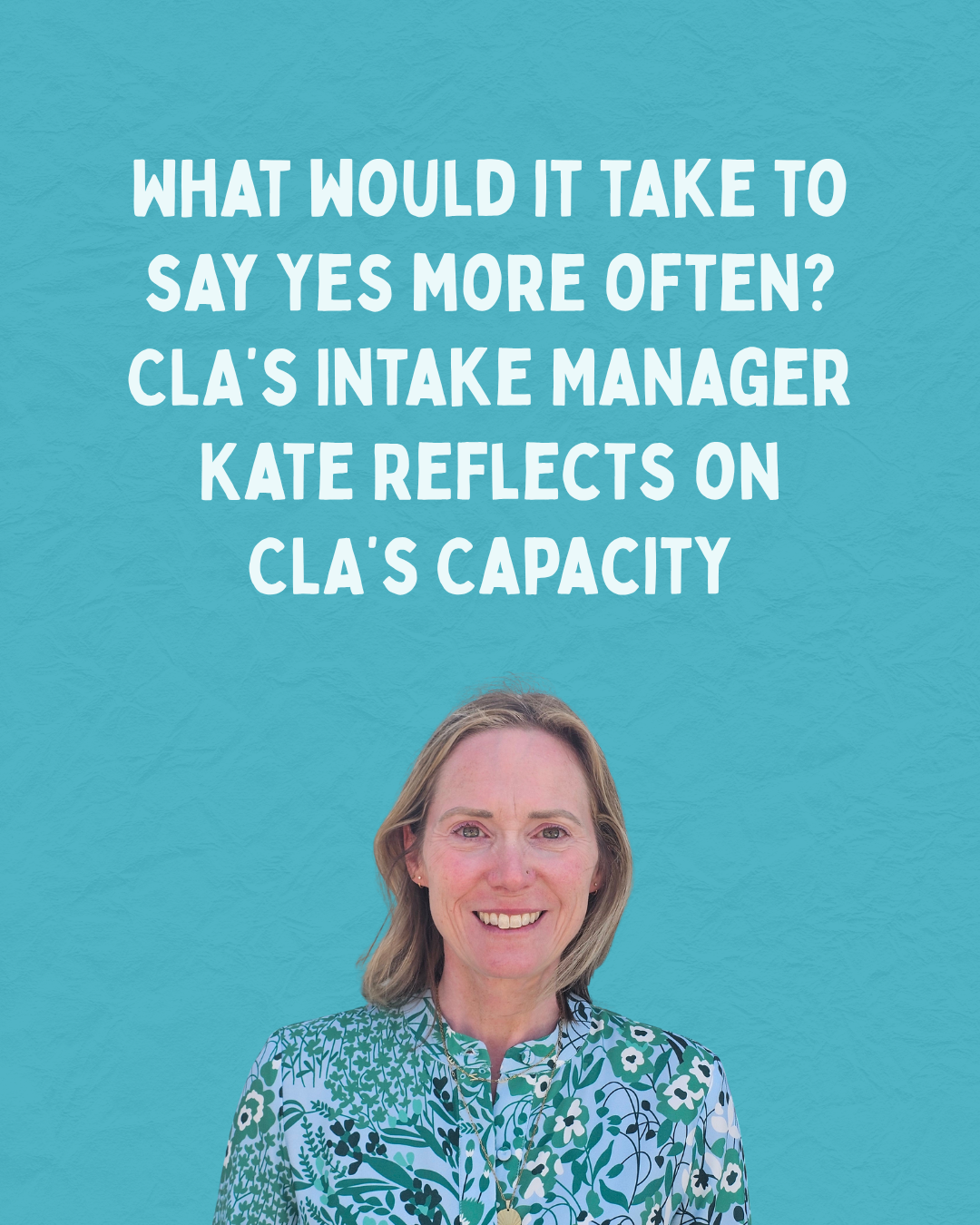
CLA’s Intake Manager, Kate Buckholz, Reflects on CLA’s Capacity and the Need to Grow So We Can Continue Expanding Access to Justice
Hi, I’m Kate. I am the Intake and Office Manager at Charleston Legal Access, which means I am the first person many of our clients speak to when they call or email the office. I gather information, listen to stories and get enough facts for the attorneys to understand the matter, often gathering some incredibly personal information; a task I do not take lightly.
One of the best parts of my job at CLA is being able to help someone by saying “yes!” when scheduling a consultation with one of our attorneys. Whether it’s immigration or any kind of family law matter, I love seeing people take a step toward solving whatever legal problem they might be facing.
Unfortunately, a big part of my job is saying no.
And it’s saying no to some of the most heart-wrenching stories I’ve ever heard, when I 100% want to help, but the scope of our work does not allow it. In some cases, it makes sense. In other cases, it makes me wonder what might be possible if we had the funding, time and bandwidth to say yes.
The truth is, the need for legal representation in the Lowcountry, particularly for people who are low-to-moderate-wage earners, far exceeds the existing capacity to meet those needs. These families are barely able to make ends meet. Groceries, gas and school fees take what precious financial margin might exist. When an emergency arises, like an eviction or domestic issue, the retainers charged by private attorneys are out of reach.
The reason CLA exists is to fill the gap between those who qualify for pro bono services and those who can afford to hire a private attorney. So when someone calls and they do fit the profile of the population we serve, but our attorneys are already overbooked helping existing clients, it makes it really hard to say no because we know their other options are so limited.
To get specific, I am talking about folks like:
The adult child of a parent with dementia who needs help walking through guardianship, end-of-life planning and eventually navigating probate court. Right now, CLA does not have the capacity to take on cases like these, but I receive at least one call a day seeking this type of support. The number of Baby Boomer families who need an attorney for this type of work is only going to grow, and this is an area where CLA could really help the aging population.
A stay-at-home mom who has no independent financial means but is living with an abusive spouse. There is a gap in the Lowcountry where women who have spent their lives raising children and not working now need a divorce but cannot get one. This is because either they cannot afford a private attorney, or pro bono agencies won’t take them without proof of physical violence, or or places like CLA are already handling so many cases that they cannot add another. Maybe all three.
These stories hit a particular nerve with me, but they should with everyone. All families deserve to feel safe, and children who witness abuse, whether financial, emotional or physical, are more likely to experience or perpetrate it as adults. It’s a cycle worth breaking.
A domestic violence victim who needs representation at an emergency hearing...like, next week. When an emergency happens, hearings to seek protection come fast, and potential clients call all the time needing representation right away. Our tiny but mighty team of attorneys is already overwhelmed with the large number of clients they are representing. This leaves us without the ability to simply drop everything and pivot to a new client. What would it look like to say yes to people in need, on a deadline, who have no experience navigating the court system?
All of the above represent real calls I have had with potential clients, and they are all people for whom I’ve had to decline our services, knowing full well that we might be their only option.
If I could wave a magic wand and “fix” this, it would come in the form of resources, capacity, and deeper partnerships across the state with other organizations aligned with ours. These are all things we work on daily but they take time and sustained commitment from donors and funders.
It's important to remember that the need is bigger than the stories that make it to our office. In the Charleston Tri-county area, almost 37% of households were living below the ALICE Threshold in 2024. ALICE stands for Asset Limited, Income Constrained, Employed: people who are working and earning more than the federal poverty level, but still not enough to afford the basics where they live. Housing, child care, food, transportation and health care often eat up nearly every dollar. One unexpected expense can push these families back into poverty.
This is the population CLA encounters every day, and they deserve access to justice just as much as someone who is not constrained by what is in their savings account.
Their cases are important. They deserve help. All of us at CLA want to help them.
Sometimes, though, we just don’t have the capacity.
That is the part of my job I wish I could change.
The good news is that capacity is something we can change.
CLA is looking to the future of what it means when the people of the greater Charleston area come together to help our neighbors. With funding and support, CLA can hire more attorneys, take on more cases, expand into areas where we know there is a growing need and respond when someone needs help now...not months from now. Funding also gives us the ability to build partnerships with other organizations so that when we can’t say yes, we can hopefully help find someone who can.
We can’t say yes to every person who calls us. I wish we could. Everyone on the CLA team does.
But until that’s a reality, we can work toward a future where fewer people have to hear no simply because there wasn’t an attorney available to help them.
If you believe everyone deserves a fair shot at navigating a legal problem, regardless of what they earn, you can help make that possible. Supporting Charleston Legal Access gives us the capacity to take on more cases, reach more people and, hopefully, say yes a little more often.
Because behind every call is a person who needs help.
Let’s help close the justice gap together.
Want to help? Donate today to help CLA say YES more often!
Need accessible, affordable, and compassionate legal care? Get in touch.
This information is provided for general informational purposes only and does not constitute legal advice.