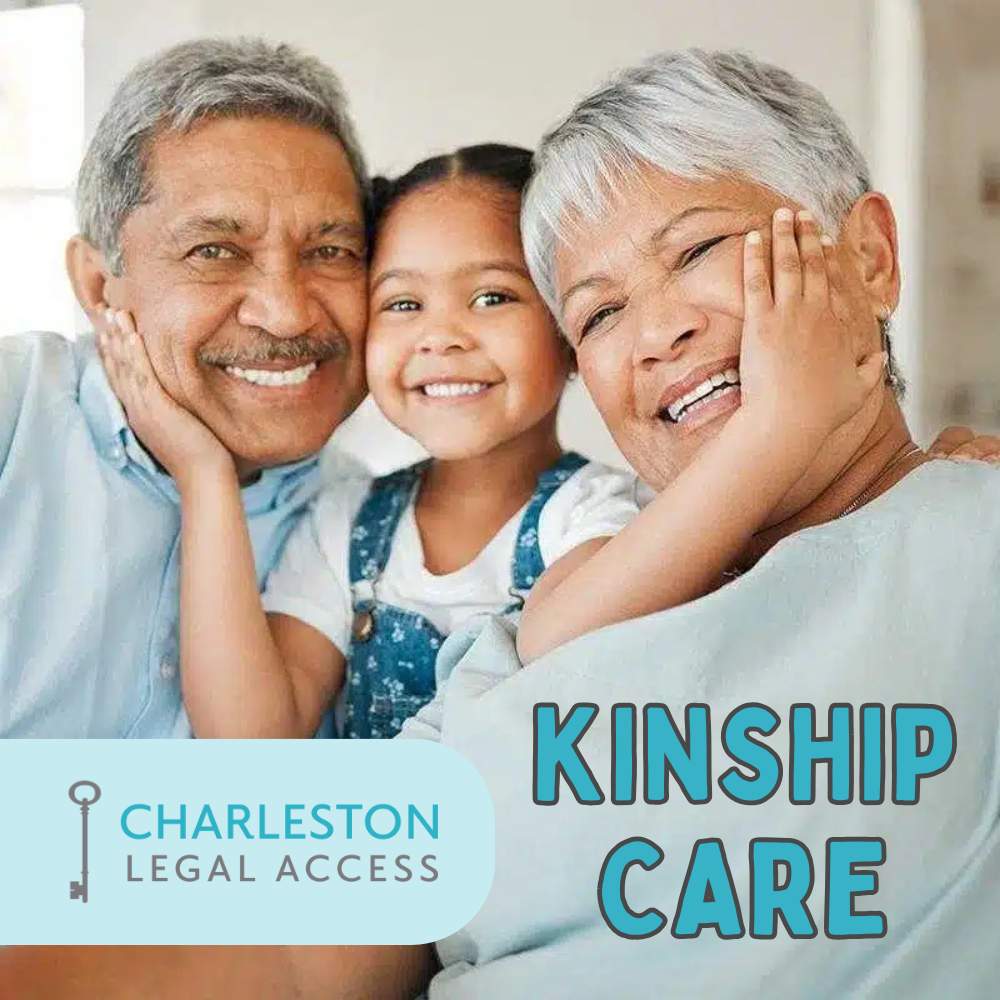
CLA Family Law Attorney Dorothy Blackwelder walks through kinship care and its processes in South Carolina.
Kinship care occurs when a parent is unable to meet the basic needs of a child and/or there is an allegation of child abuse or neglect and that child is placed with a relative or friend.
Kinship Caregivers are related to the child by blood, marriage, or adoption, but the South Carolina Department of Social Services (SCDSS) also utilizes Fictive Kinship Caregivers who are not related but have a relationship with the child such as a godparent, teacher, family friend, neighbor, pastor, etc.
South Carolina is a “Kin First State” with the goal of locating kin or fictive kin for children prior to placing them in foster care, recognizing that keeping children in their community with connections to family, friends, and culture is important for their development.
UNDERSTANDING THE DSS PROCESS FOR KINSHIP IN SOUTH CAROLINA
When SCDSS is involved, Kinship Care can be informal or formal.
Informal Kinship Care involves an agreement called a Safety Plan made between the parent and the kinship caregiver, which is in place for a short-term, typically 60-90 days. The court is not involved and the child is not in the custody of SCDSS in an informal kinship care relationship.
Formal Kinship Care is a formal arrangement with court involvement. A judge can give a kinship caregiver temporary custody of a child when a SCDSS investigation is opened.
A child comes into custody of SCDSS only when (1) the parent consents to removal, (2) a law enforcement officer takes emergency protective custody, or (3) when a court has issued an ex parte order for emergency protective custody.
In Formal Kinship Care, there are three necessary hearings.
A Probable Cause Hearing must be held within 72 hours of the child coming into the care of SCDSS to determine whether there was probable cause that imminent and substantial danger existed at the time of removal and continues to exist.
A Merits Hearing must occur within 35 days of when the child enters care of SCDSS and is the process for SCDSS to obtain necessary finds of abuse and/or neglect so that DSS can continue to provide services to reunify families or pursue other permanency options.
A Permanency Planning Hearing must occur within 12 months of the child entering care to establish a permanent plan for the child.
Kinship caregivers in a formal process are a part of a team of people ensuring the safety and health of the child, including a SCDSS case manager and court-appointed Guardian ad Litem, who will each make monthly visits with the child and can help caregivers receive any needed services or support for the child and caregiver.
Kinship care can be temporary or permanent. SCDSS prioritizes reunification with parents and works with them to complete treatment plans, but courts will ultimately make decisions based on what is in the best interest of the child. Based on the court’s decision, reunification may not be possible and a kinship care relationship may become permanent.
KINSHIP CARE VS. FOSTER CARE: WHAT’S THE DIFFERENCE?
Foster care providers are not known to the child. They are licensed by the state after completing training, background checks, a home study, fire code inspection, and providing references. Foster care parents must complete 15 hours of training each year to maintain their license and receive a small stipend for each day a child is in their care.
Kinship caregivers are known to the child. They must complete a background check, but are not required to complete training and do not receive a stipend.
Kinship caregivers do have the option of becoming Licensed Kinship Foster Parents. They can only become licensed through formal kinship care, when there is a current open case with SCDSS and the foster care line is opened by a judge. The kinship caregiver completes the required paperwork and will be provisionally licensed until they complete the licensure process within 60-90 days. A kinship foster care license differs from a regular foster care license in that it is specific to the child or children of the kin.
A licensed kinship foster parent will receive the benefits and services that other foster parents receive, including the daily stipend thorough monthly board payments. Licensed kinship foster parents also receive training and case management support to help with meeting the child’s needs and working with the child’s parents.
YOUR OPTIONS AS A KINSHIP CARE PROVIDER IN SOUTH CAROLINA
Kinship caregivers should communicate frequently with the child’s case manager to stay informed about the case and be able to attend any hearings, as well as the Pre-Merits Conference held prior to the Merits Hearing (a Pre-Merits Conference is a meeting where all parties meet to come up with a recommendation to be given at the Merits Hearing). Kinship caregivers should request to be added as a party to any open case at the Probable Cause or Merits Hearing, so they have access to all the information about the case.
A licensed kinship foster parent may seek Subsidized Legal Guardianship when the child has been in the home for more than six months, reunification with the parent is not possible and the caregiver intends for the relationship to be permanent. Through this program, monthly subsidy payments and other means of support may be available.
Kinship caregivers who have physical custody under an informal process can petition the court for legal custody if reunification with the parent(s) is not possible.
Kinship caregivers should consult a family law attorney to fully understand their rights and responsibilities.
THERE ARE MANY RESOURCES FOR KINSHIP CAREGIVERS:
HALOS specializes in helping kinship caregivers in the Charleston area through support groups and providing school supplies, Christmas gifts, cribs, and car seats.
SC Thrive can help kinship caregivers, including those not involved with SCDSS.
Medicaid is available for children 18 and under who are in formal kinship care.
Kinship caregivers may be eligible for Temporary Assistance for Needy Families (TANF), however proof of a family relationship must be provided, so this is not available to fictive kin. Kinship caregivers may also apply for the Supplemental Nutrition Assistance Program (SNAP), WIC (for pregnant women and children under five), BabyNet (for toddlers under three), and SC Vouchers or ABC Vouchers (to assist with day care and preschool).
Learn more from DSS, the Kinship Care Brochure, and HALOS.
IN SUMMARY
What Is Kinship Care? — Kinship care places children with relatives or trusted adults when parents cannot safely care for them, prioritizing family and community connections over traditional foster care
Understanding the DSS Process for Kinship Care in South Carolina — Kinship care can be informal (short-term safety plans without court involvement) or formal (court-ordered with DSS custody), involving required hearings and ongoing oversight
Kinship Care vs. Foster Care: What’s the Difference? — Kinship caregivers are known to the child and face fewer requirements, while foster parents are licensed, trained, and paid; kinship caregivers may choose to become licensed kinship foster parents to access stipends and additional services
Your Options as a Kinship Care Provider in South Carolina — Caregivers can attend court proceedings, pursue legal custody in some situations, and—if licensed—access subsidized guardianship when reunification is not possible
Resources for Kinship Caregivers — Support is available through organizations like HALOS, SC Thrive, DSS, and Charleston Legal Access, along with public benefits such as Medicaid, TANF, SNAP, and childcare assistance
Need help navigating kinship care? Our attorneys offer affordable, sliding scale services.
Want to help? Support families stepping up to care for children in need.
This information is provided for general informational purposes only and does not constitute legal advice.